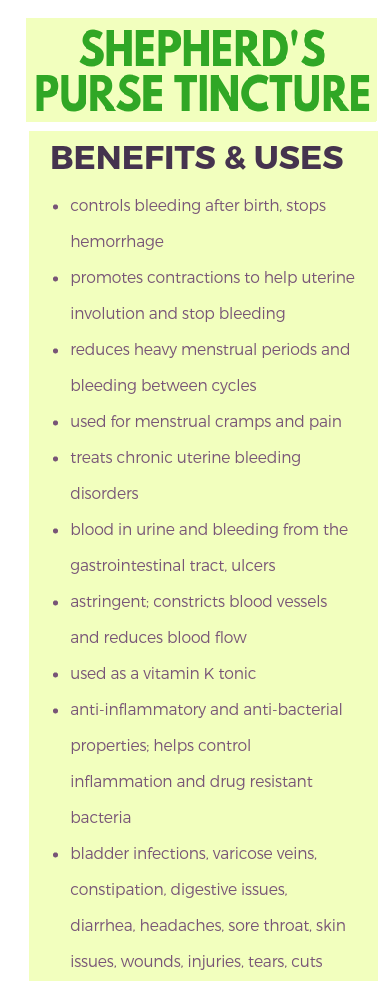
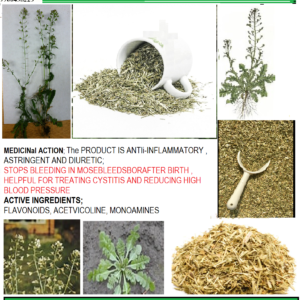
Shepherd’s purse is a small wild herb recognized by its heart-shaped seed pods, often compared to tiny purses. It grows naturally across the world and has been used since ancient times for its strong astringent and circulation-regulating properties. Traditionally, it is known for its role in managing menstrual health. When taken a few days before menstruation, the tincture can help prevent heavy bleeding. It may also reduce bleeding caused by uterine fibroids. Midwives have long used shepherd’s purse right after childbirth because it supports uterine contractions similar to oxytocin, helping the uterus return to its normal size and reducing the risk of postpartum haemorrhage.
The herb is equally valued for external use. Applied topically, it helps slow bleeding from cuts, skin injuries, and bruises while encouraging healing. Some herbal practitioners use it for varicose veins, eczema, and inflammatory skin conditions. Internally, it is used to address issues like blood in the urine, nosebleeds, hemorrhoids, and other forms of internal bleeding. Its diuretic action makes it helpful for cystitis, mild urinary infections, and fluid retention. In Chinese medicine, shepherd’s purse is used to brighten the vision and treat blurriness or spots before the eyes.
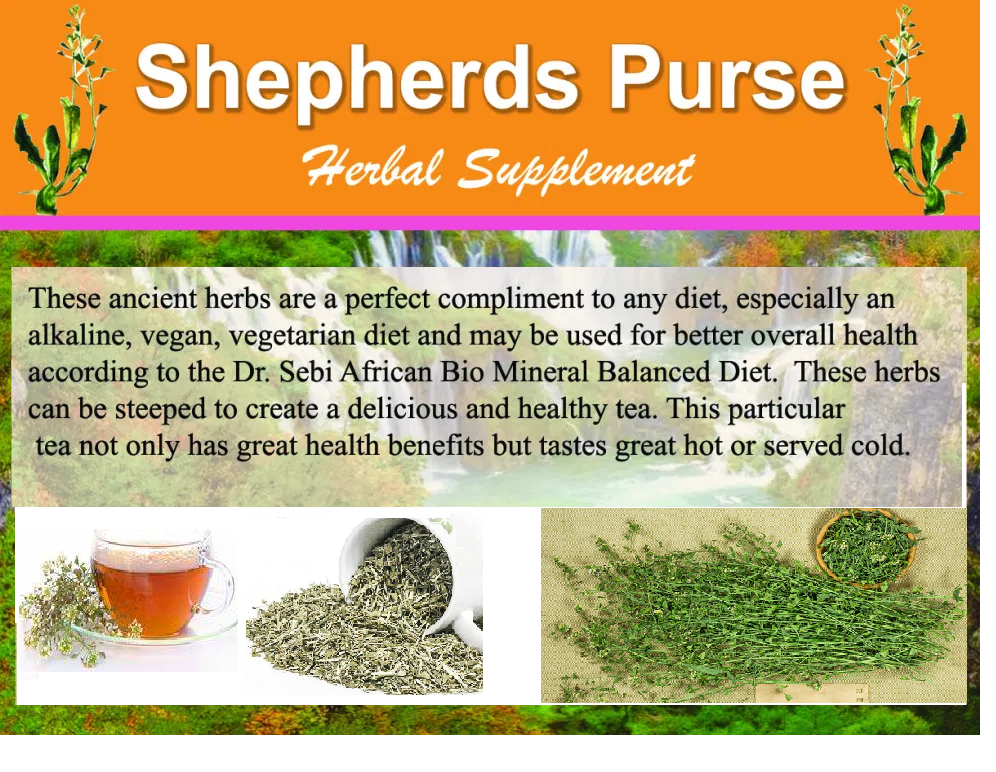
Shepherd’s purse can be taken as a tincture, tea, capsules, or fluid extract. The typical tincture dose is ¼ to ½ teaspoon up to four times a day. Tea can be made from 3–5 grams of the dried herb steeped for 10–15 minutes.
This herb should be used with care. It is not recommended for people with high blood pressure, kidney or liver disease, or those taking blood-thinning or blood-clotting medications. It should also be avoided during pregnancy.






 Shepherds Purse








Reviews
There are no reviews yet.